

Services
Accounting Services
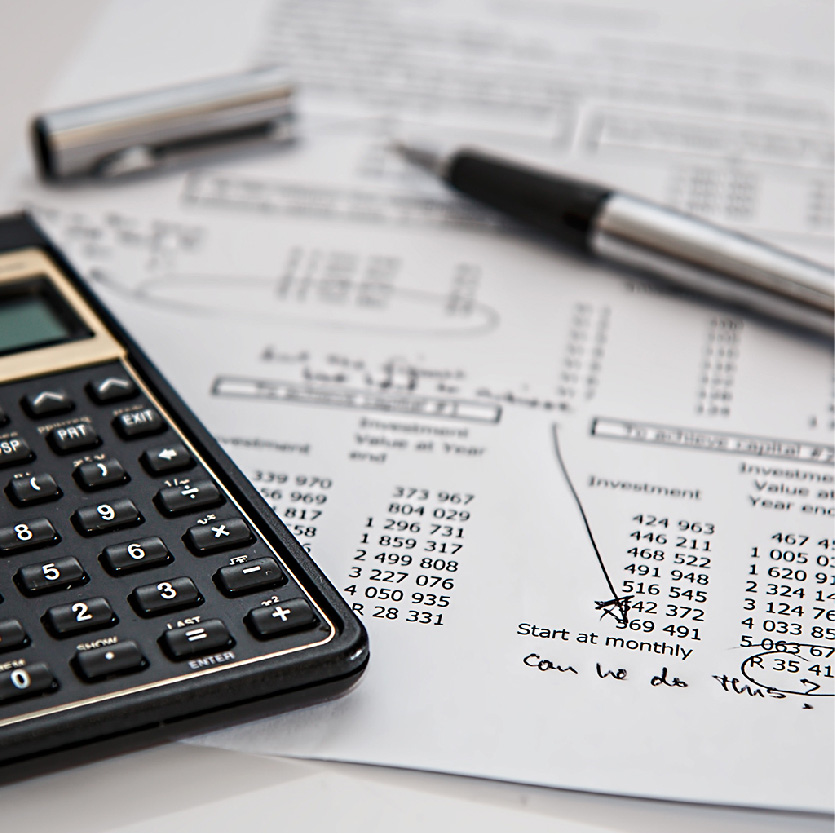
Financial Statements are a formal document that includes an Accounting Officer/Auditor’s Report, Statement of Assets and Liabilities, Income Statement, Balance Sheet, and sometimes a Cash Flow Statement. They must comply with Financial Reporting Standards and be consistently applied. They are typically compiled annually or periodically.
Many companies only finalise their Financial Statements when seeking funding from banks, applying for tenders, or obtaining a tax clearance certificate. However, according to the South African Companies Act, companies must compile Annual Financial Statements within six months after the end of the financial year.
Financial Statements provide critical information on the state of a business and are required for various purposes such as applying for financing, determining tax liability, applying for tenders and contracts, and making important business decisions. They can be compiled using a variety of documents such as customer and supplier invoices, bank statements, and a fixed assets register. For more information, refer to The South African Companies Act, No. 71 of 2008.
Financial Statements
A Financial Statement is a formal document that consists of an Accounting Officer’s/Auditor’s Report, Statement of Assets and Liabilities, Income Statement, Balance Sheet and often a Cash Flow Statement. It also mentions the accounting policies used in the compilation of the Financial Statement as it must comply with Financial Reporting Standards and apply them consistently.
Financial Statements are compiled periodically or annually.
We notice many companies only finalise their Financial Statements when they require funding from banks or obtain tenders or require a tax clearance certificate from SARS.
The South African Companies Act, No. 71 of 2008 (the Act), as amended, stipulates that companies must compile Annual Financial Statements (AFS) for each financial year within six months after the end of its financial year.
According to the Act, the financial statement shall:
- Adhere to suitable accounting policies and apply them consistently
- present fairly the state of affairs and business of the company, and explain the transactions and financial position of the business of the company.
- show the company’s assets, liabilities and equity, as well as its income and expenses, and any other prescribed information
Besides the regulatory requirement of finalising your Financial Statement, it provides you with critical information on the state of your business. By analysing your Financial Statement, you can make important decisions on the future of your business.
Below is a summary of the instances where Financial Statements are required:
- applying for financing from banks or other funding schemes – banks usually review the solvency & liquidity position of the business and, amongst other factors
- determining your tax liability for SARS
- applying for tenders & contracts – businesses would want to evaluate your company before granting you a possible tender or contract
- mergers & acquisitions – businesses would evaluate your financial performance & position before attempting to merge with you
- complying with CIPC and the Companies Act of South Africa.
- conversion to iXBRL Financial Statements
- making critical managerial decisions regarding the future growth of your business.
What documents are required to compile Financial Statements?
The following are typical documents required for the compilation of Financial Statements:
- Customer Invoices & Statements
- Supplier Invoices & Statements
- Bank Statements
- Fixed Assets Register
For more information, refer to The South African Companies Act, No. 71 of 2008.
Management Accounts
Management accounts, also known as internal financial reports, are tailored financial reports created for business owners and managers on a monthly or quarterly basis. They are a valuable tool for decision-making as they provide insights into a company’s key performance indicators (KPIs), such as profitability, overhead costs, and sales performance.
While the preparation of management accounts is not a legal requirement, it is crucial for business success. They typically include a Profit & Loss statement and a Balance Sheet, which provide a comprehensive overview of the business’s financial performance. Management accounts go beyond the traditional financial measures such as sales, order book and bank accounts and provide a deeper understanding of the business’s financial health. They allow business owners to identify strengths and weaknesses and make informed decisions to improve performance. Furthermore, they also enable monthly and yearly comparisons of the business’s performance, which helps to identify trends and make adjustments as needed.
Cash Flow Projections & Budgeting
Cash flow projections and budgeting are essential financial management tools for businesses of all sizes. They help businesses anticipate potential cash shortages and surpluses and make decisions to improve their cash flow. Cash flow projections predict the inflow and outflow of cash in a company over a certain period of time, typically a year.
Budgeting, on the other hand, is the process of creating a financial plan for a certain period of time, typically a year. It involves forecasting income and expenses and setting financial goals for the business. Budgeting helps businesses make informed decisions on how to allocate resources and manage costs. It is also a useful tool for monitoring and controlling spending and identifying areas where cost savings can be made.
Cash flow projections and budgeting are closely related, as cash flow projections are used to create budgets and to ensure that the business has enough cash to meet its financial obligations. By creating a budget and monitoring it regularly, businesses can identify variances and take corrective action to stay on track.
When creating cash flow projections and budgets, it’s important to consider all sources of income and expenses, including fixed costs, variable costs, capital expenditures, and any one-time or irregular expenses. It’s also important to consider the timing of cash inflows and outflows and to factor in any contingencies or potential changes in the business environment.
In summary, cash flow projections and budgeting are powerful tools that help businesses predict and manage their financial performance. They enable businesses to anticipate cash shortages and surpluses, manage costs, and make informed decisions about resource allocation. Regularly monitoring and updating cash flow projections and budgets can help businesses stay on track and achieve their financial goals.
Business Plans
A business plan is a written document that outlines a company’s strategy, goals, and objectives. It serves as a roadmap for the business, providing a clear direction and a plan of action for achieving success. Business plans are typically used when starting a new business, seeking funding, or making significant changes to an existing business.
A business plan typically includes the following key elements:
- Executive summary: This is a brief overview of the business, its products or services, target market, and financial projections.
- Company description: This section provides an in-depth look at the business, including its history, mission statement, and organisational structure.
- Industry analysis: This section provides an overview of the industry, including market size, trends, and competition.
- Market analysis: This section focuses on the target market, including market size, segmentation, and customer needs and demands.
- Competitive analysis: This section compares the business’s products or services to those of its competitors, highlighting the business’s unique selling points.
- Sales and marketing strategy: This section outlines the business’s sales and marketing plan, including tactics and methods for reaching the target market and generating revenue.
- Financial projections: This section includes financial projections, such as income statements, balance sheets, and cash flow statements, which provide an overview of the business’s financial performance and potential.
- Management and organisational structure: This section describes the business’s management and organisational structure, including key personnel and their roles and responsibilities.
- Funding request: This section is included when the business plan is used to seek funding, it outlines the amount and use of funds required and the terms of repayment.
Business plans are not static documents; they should be reviewed and updated regularly as the business evolves and new opportunities arise. It can be a valuable tool for keeping the company on track and for communicating the business’s strategy and goals to stakeholders such as investors, employees, and partners.
In summary, a business plan is a comprehensive document that outlines a company’s strategy, goals, and objectives. It includes key elements such as an executive summary, company description, industry and market analysis, sales and marketing strategy, financial projections, management and organisational structure, and funding requests. It serves as a roadmap for the business, providing a clear direction and an action plan for achieving success.
Year-end Planning
Year-end planning is the process of preparing for the end of a fiscal year, typically end of February. It’s an important part of financial management, as it ensures that a business is in compliance with accounting, tax, and other legal requirements. Year-end planning also provides an opportunity to review the business’s performance, make adjustments, and set goals for the coming year.
Some key steps in year-end planning include:
- Reviewing financial statements such as balance sheets, income statements, and cash flow statements can help identify any discrepancies or issues that need to be addressed.
- Reviewing and reconciling accounts – This includes reconciling bank accounts, accounts payable and receivable, and inventory to ensure that they are accurate and in compliance with accounting and tax regulations.
- Reviewing the budget and adjusting it as necessary to align it with the business’s financial performance and goals for the coming year.
- Reviewing tax strategies and making adjustments as necessary to minimise the business’s tax liability.
- Reviewing legal compliance to ensure that the business complies with all relevant laws and regulations, such as labour, safety, and environmental regulations.
- Reviewing and updating insurance coverage to ensure the business is adequately protected against potential risks.
- Reviewing and updating employee benefit plans and health insurance to ensure that they are in compliance with all relevant regulations.
- Reviewing and updating business plans and strategies: Reviewing and updating business plans and strategies to ensure that they are aligned with the business’s goals and objectives.
Year-end planning is not a one-time event but an ongoing process that should be reviewed and updated regularly. It also involves collaboration and communication between different departments and stakeholders, such as accounting, finance, legal, tax, and management.
In summary, year-end planning is an important process of preparing for the end of a fiscal year. It involves reviewing and reconciling financial statements, budgets, and accounts, reviewing and updating tax strategies, legal compliance, insurance coverage, employee benefit plans, and business plans and strategies. It ensures that the business complies with accounting, tax, and other legal requirements and provides an opportunity to review the business’s performance, make adjustments, and set goals for the coming year.
Review of Internal & Operational Controls
A review of internal and operational controls is the process of evaluating and testing a company’s internal controls and processes to ensure that they are effective and efficient in protecting the company’s assets, ensuring compliance with laws and regulations, and achieving business objectives.
Internal controls are the policies, procedures, and processes that a company has in place to safeguard its assets, ensure compliance with laws and regulations, and promote accuracy and reliability in financial reporting. Examples of internal controls include the segregation of duties, access controls, and monitoring and reporting systems.
Operational controls, on the other hand, refer to the processes and procedures that a company has in place to manage and control its day-to-day activities and operations. Examples of operational controls include inventory management, production processes, and customer service.
A review of internal and operational controls is typically conducted by an internal auditor or an independent third party. The review process involves evaluating and testing the company’s internal controls and procedures, identifying deficiencies or weaknesses, and recommending improvements. It also includes testing the effectiveness of the controls in place by reviewing documentation, observing processes, and interviewing employees.
The review process can include the following steps:
- Identifying the scope of the review: This includes determining which areas of the business will be covered in the review and what specific controls will be evaluated.
- Conducting a risk assessment: This involves identifying the risks that the business faces and assessing the likelihood and impact of those risks.
- Evaluating and testing internal controls: This includes reviewing the company’s policies and procedures, observing operations, and testing the effectiveness of controls.
- Identifying deficiencies and recommending improvements: This includes identifying any deficiencies or weaknesses in the company’s internal controls and processes and recommending improvements to address those deficiencies.
- Communicating findings and recommendations: This includes communicating the findings and recommendations of the review to management and other stakeholders.
Regular review of internal and operational controls is crucial for ensuring that a business is operating effectively and efficiently, and is in compliance with laws and regulations. It also helps to identify and mitigate risks and improve the overall performance of the business.
In summary, A review of internal and operational controls is the process of evaluating and testing a company’s internal controls and processes to ensure that they are effective and efficient in protecting the company’s assets, ensuring compliance with laws and regulations, and achieving business objectives. It typically involves identifying the scope of the review, conducting a risk assessment, evaluating and testing internal controls, identifying deficiencies and recommending improvements, and communicating findings and recommendations to management and other stakeholders. It is a crucial step for ensuring that a business is operating effectively and efficiently and is in compliance with laws and regulations.
